
Strengthening Regional Value Chains...
Over recent months, The Aquaculture Cons...
The Aquaculture and Blue Economy Consortium (TAC) continues to play a leading role in strengthening sustainable aquaculture and circular food systems across East Africa. As demand for affordable, high-quality protein continues to rise, aquaculture in Kenya and the wider region has become a critical pathway for improving food security, supporting livelihoods and building climate-resilient agricultural systems.
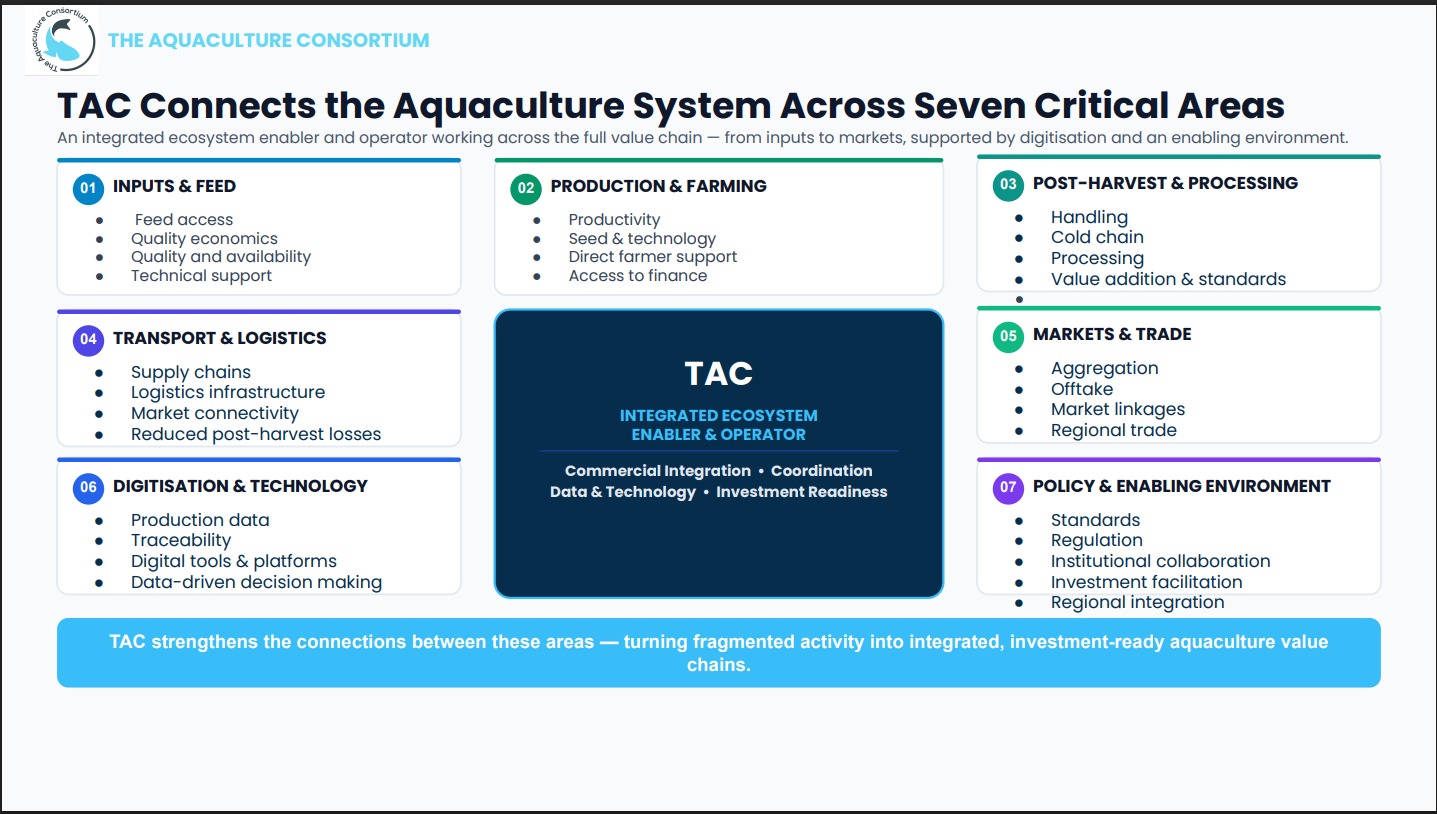
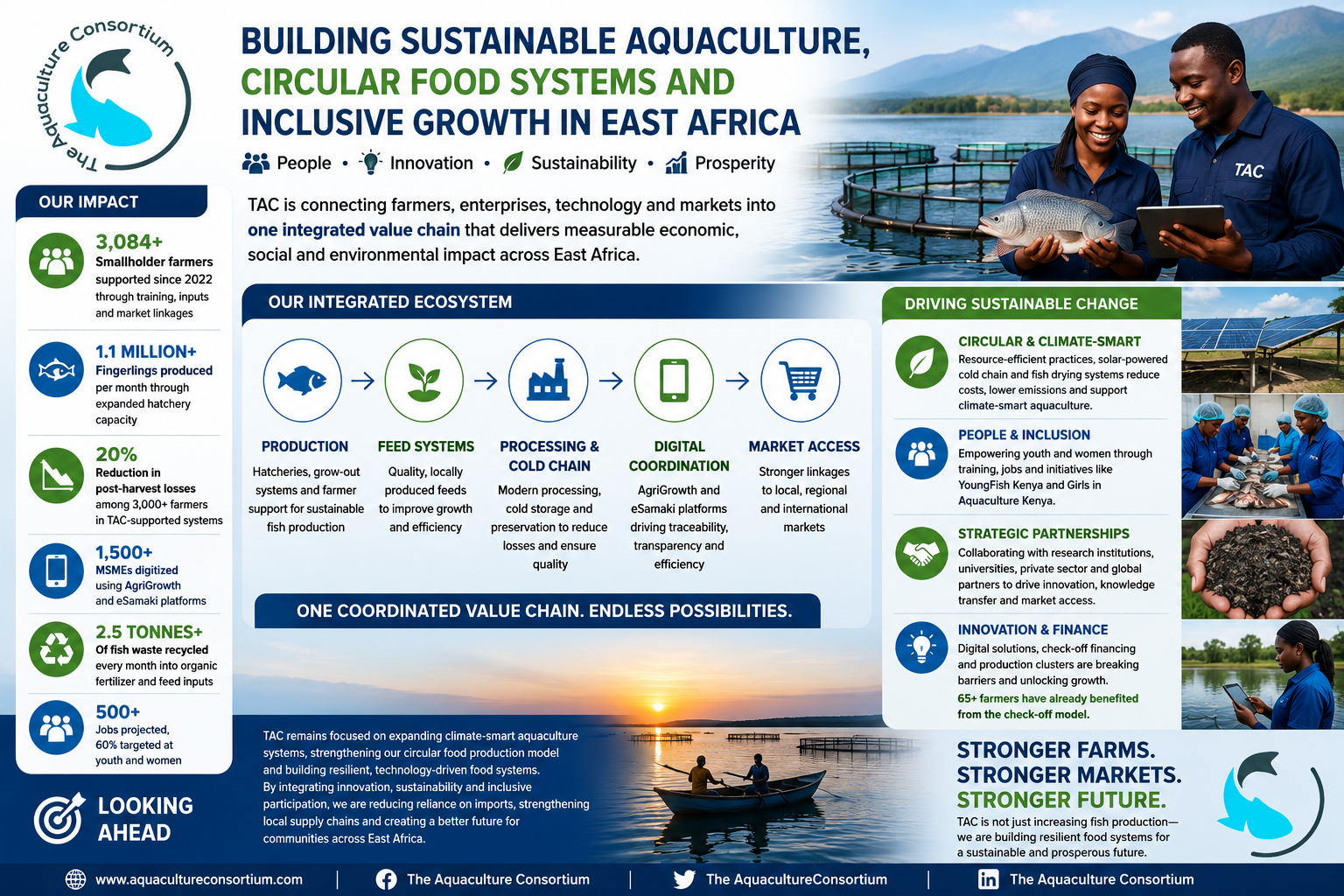
Through its integrated ecosystem of enterprises, TAC connects fish production, feed systems, processing, digital coordination, and market access into one coordinated value chain. This approach addresses long-standing inefficiencies in the aquaculture sector while creating measurable economic, social, and environmental benefits for thousands of farmers and businesses.
Since 2022, TAC has supported more than 3,084 smallholder farmers through training, access to inputs, and structured market linkages. By strengthening production capacity and introducing coordinated supply systems, TAC has helped farmers transition from small-scale subsistence production to more reliable and commercially viable fish farming operations. One of the most significant production achievements has been the expansion of hatchery capacity, which now supports the production of over 1.1 million fingerlings per month, helping stabilize fish supply across multiple regions.
Post-harvest losses remain one of the biggest challenges affecting aquaculture in Kenya, with national losses estimated at 30–40% due to inadequate cold chain infrastructure and market coordination. TAC has addressed this challenge through investments in processing facilities, cold-chain systems, and aggregation networks. Among the 3,000+ farmers working within TAC-supported systems, post-harvest losses have been reduced by approximately 20%, significantly improving product quality, shelf life, and farmer income stability.
Digital transformation has also become a key driver of progress within TAC’s ecosystem. Through the AgriGrowth and eSamaki digital platforms, TAC has successfully digitized more than 1,500 micro, small, and medium enterprises (MSMEs) operating across aquaculture value chains. These digital tools support traceability, inventory management, pricing transparency, and financial access, allowing farmers and processors to operate more efficiently and with greater confidence. By improving data visibility and strengthening coordination, digital systems are helping modernize fish farming in Kenya while creating stronger links between producers and markets.
Environmental sustainability remains at the heart of TAC’s circular production model. Through resource-efficient practices, TAC currently recycles more than 2.5 tonnes of fish waste every month into organic fertilizer and feed inputs. This circular system reduces waste, lowers production costs and supports sustainable agriculture by strengthening the link between aquaculture and crop farming. The introduction of solar-powered cold chain and fish drying systems has also contributed to reduced energy costs and lower carbon emissions, supporting climate-smart aquaculture across participating regions.
Beyond production and infrastructure, TAC continues to invest in people and inclusive economic growth. The organization has projected the creation of over 500 jobs, with approximately 60% targeted toward youth and women, reflecting a strong commitment to gender inclusion and youth empowerment in aquaculture. Initiatives such as YoungFish Kenya and Girls in Aquaculture Kenya are helping build a new generation of skilled professionals while expanding opportunities for participation in the blue economy.
Strategic partnerships remain a major strength within TAC’s ecosystem. Collaboration with research institutions, universities, private sector partners, and international organizations has enabled knowledge transfer, technology adoption, and standards alignment across the aquaculture sector. TAC has also expanded its international presence through engagement with global aquaculture networks, including partnerships that support technical exchange and innovation. These collaborations are helping position TAC as a bridge between African aquaculture systems and international markets.
Innovation continues to drive TAC’s long-term strategy. By investing in digital platforms, structured financing systems such as check-off models and coordinated production clusters, TAC is addressing structural bottlenecks that have historically limited aquaculture growth in Kenya. More than 65 farmers have already benefited from the check-off financing model, enabling access to inputs without upfront costs and improving long-term production stability.
Looking ahead, TAC remains focused on expanding climate-smart aquaculture systems while strengthening its circular food production model. Continued investments in production capacity, digital infrastructure, and market systems are expected to further reduce reliance on imports while strengthening local supply chains. By integrating innovation, sustainability, and inclusive participation, TAC is demonstrating that aquaculture in East Africa can serve as a powerful engine for economic growth, environmental sustainability, and food system transformation.
As aquaculture continues to evolve into one of the fastest-growing sectors in sustainable agriculture, TAC stands at the forefront of building scalable solutions that support farmers, businesses, and communities across the region. Through its integrated approach, TAC is not only increasing fish production—it is building resilient, technology-driven food systems designed to meet the demands of the future.
Over recent months, The Aquaculture Cons...
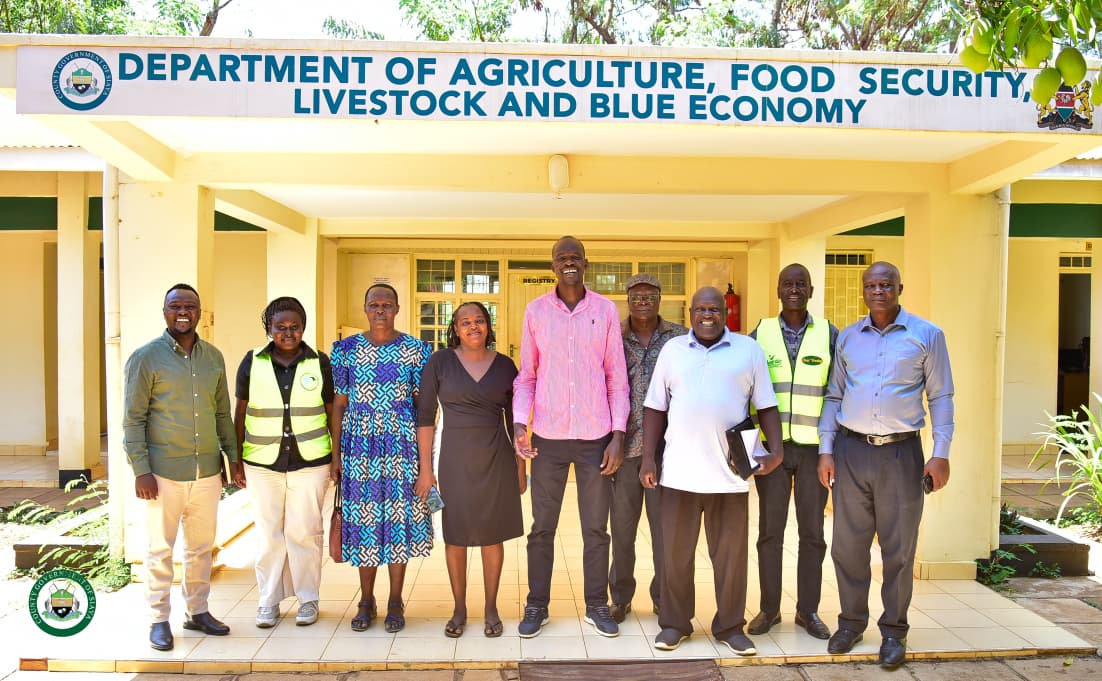
Knowledge alone does not unlock growth. ...
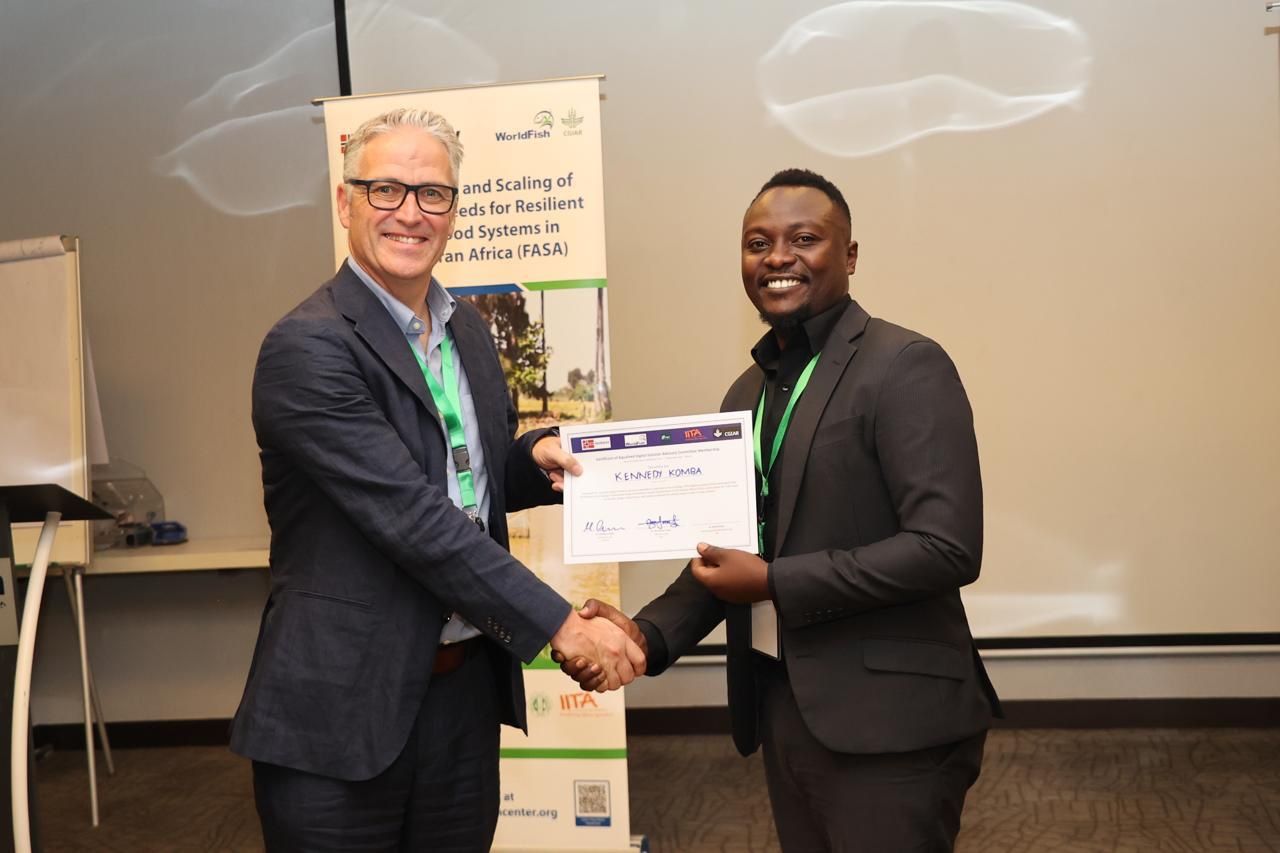
We were represented by COO Kennedy Comba...
Unlocking the potential of Kenya's aquaculture through strategic partnerships and sustainable innovation.
Partner With Us